
GLP-1 face and tech neck may sound like social media shorthand, but both reflect how modern science and technology are changing the way we age.
Smartphones have transformed how we work, communicate, and socialize, while GLP-1 medications have revolutionized the treatment of diabetes and obesity. These advances can provide meaningful benefits, but they may also create new concerns involving facial volume, skin laxity, neck lines, and overall skin quality.
Today we will be breaking down this topic to shed some light on the underlying mechanisms and solutions with Dr. Chelsea Hoffman.
“Modern life has changed the way we age, but new technology has also expanded what dermatologists are able to do to maintain skin quality and restore balance.” - Dr. Hoffman

What Is GLP-1 Face?
“GLP-1 face” is an informal term used to describe facial changes that may become noticeable after significant or rapid weight loss.
Although the name refers to GLP-1 drugs, similar changes can also occur after weight loss caused by other medications, surgery, illness, or major lifestyle changes.
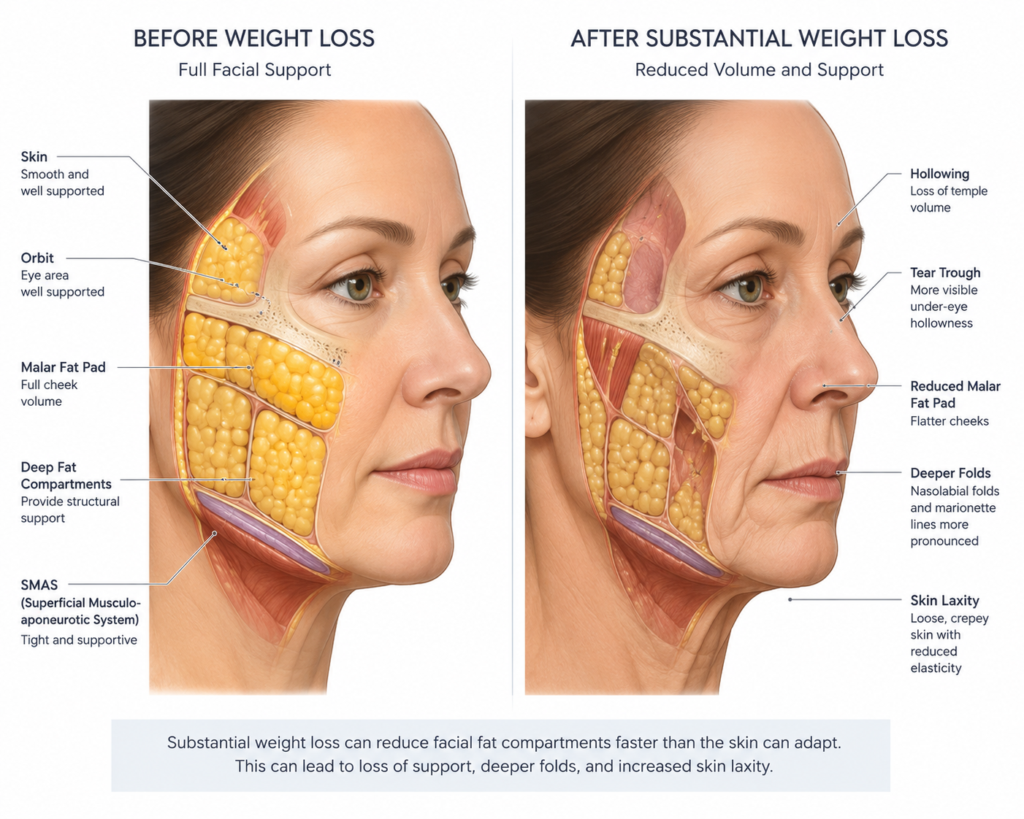
GLP-1 medications reduce appetite and help patients feel full for longer, which can lead to substantial weight loss. As body fat decreases, facial fat may decrease as well.
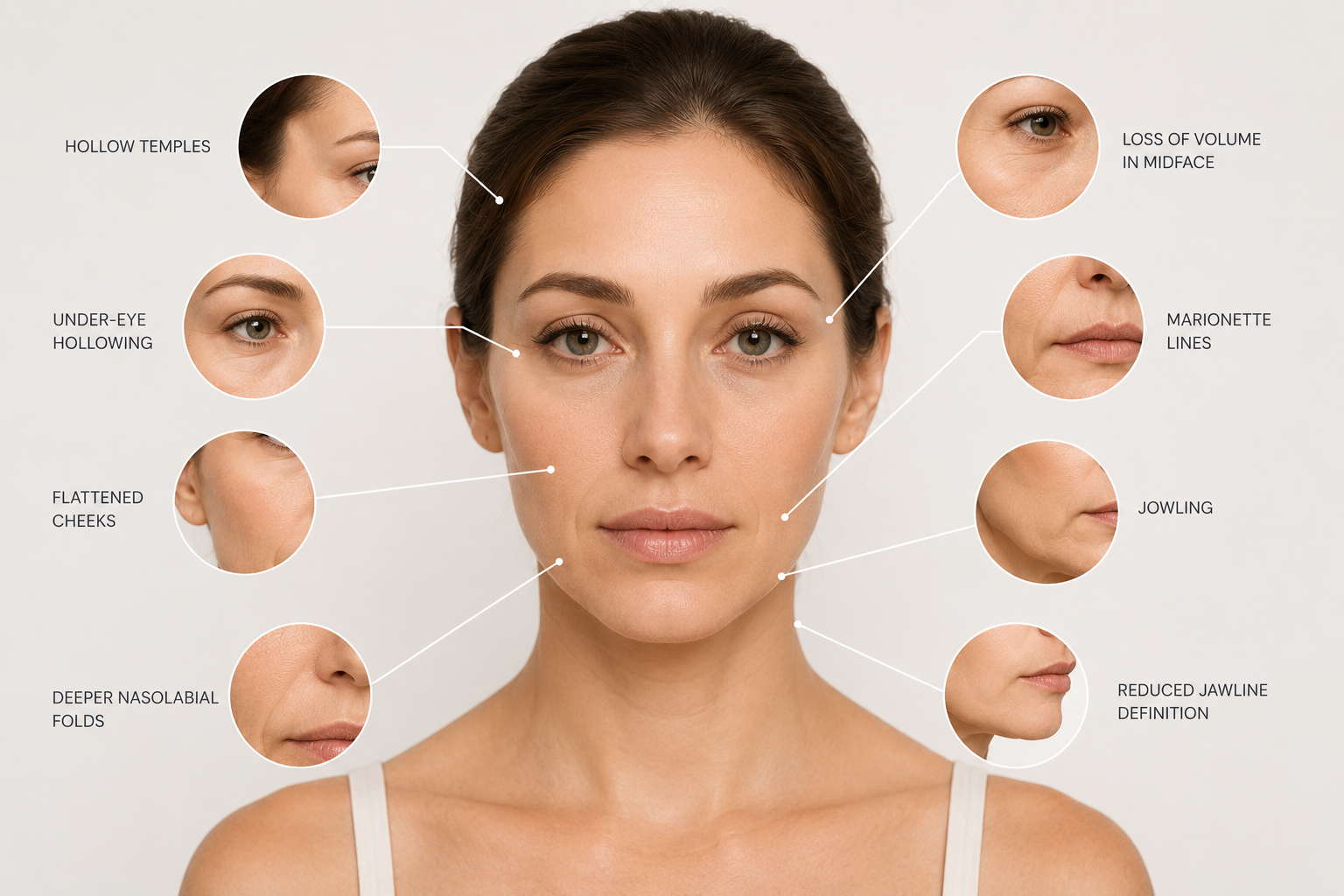
The fat compartments beneath the skin help support the cheeks, temples, under-eye area, and jawline. When this volume is lost faster than the skin can adapt, the face may appear more hollow, lax, or sharply contoured.
Age, genetics, sun damage, baseline facial structure, and the amount and speed of weight loss all influence how visible these changes become.
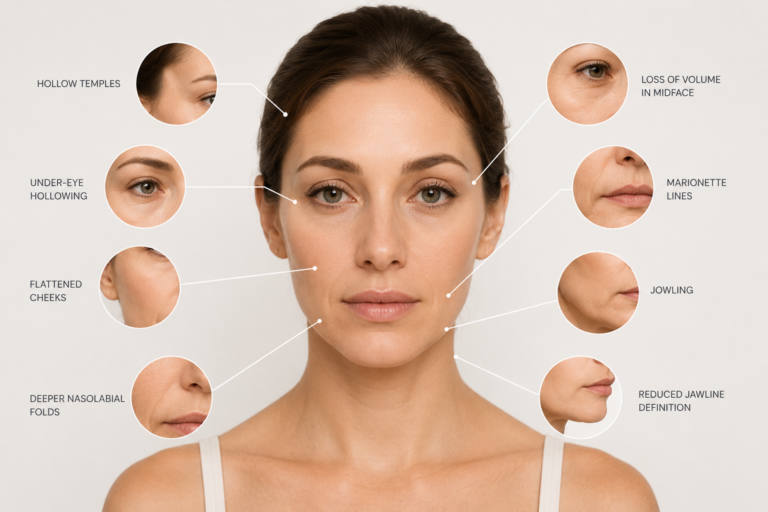
Cooperating with a dermatologist while on GLP-1 medication can be beneficial for your skin.
The Most Visible Signs of GLP-1 Face
Common concerns may include:
- Hollow temples
- Flatter or less supported cheeks
- More visible under-eye hollows
- Deeper nasolabial folds
- Marionette lines
- Jowling
- Reduced jawline definition
- Loose or crepey skin on the face and neck
Some patients may also experience dryness, dullness, brittle nails, or temporary hair shedding, particularly if rapid weight loss is accompanied by reduced protein, nutrient, or fluid intake.
“GLP-1 face is not one uniform change. A dermatologist evaluates where volume has been lost, where skin quality has changed, and where treatment is needed to create the most natural improvement.” - Dr. Hoffman
How Rapid Weight Loss Changes the Face
GLP-1 Skin, Hair, and Nail Concerns
Facial volume loss is only one possible concern associated with GLP-1 medications.
Some patients may experience:
- Dry or irritated skin
- Injection-site reactions
- Increased sweating
- Acne changes
- Brittle nails
- Hair shedding
- Loose skin that creates friction or irritation
Hair shedding may occur and is thought to primarily be due to a process called telogen effluvium, a temporary condition that can follow rapid weight loss, physical stress, or inadequate nutrient intake.
GLP-1 medications may also benefit certain inflammatory skin conditions. Early research suggests that some patients with psoriasis or hidradenitis suppurativa may experience improvement as weight, insulin resistance, and systemic inflammation decrease.
What Is Tech Neck?
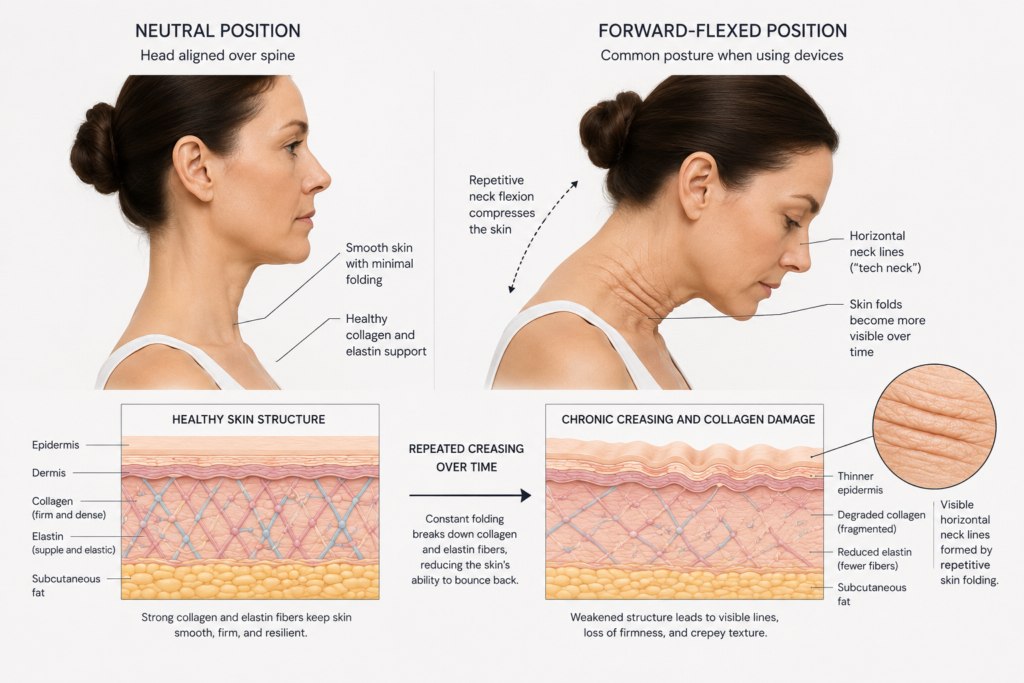
Tech neck originally described the pain and postural strain caused by looking down at phones, tablets, and laptops for extended periods. In aesthetic dermatology, the term is also used to describe horizontal neck lines, early creasing, textural changes, and laxity that may become more visible with repetitive neck flexion.
Horizontal neck lines are not caused by technology alone. Genetics, anatomy, natural movement, age, and sun exposure can all contribute. However, repeatedly folding the skin in the same position may deepen existing lines over time.
How Tech Neck Affects the Skin
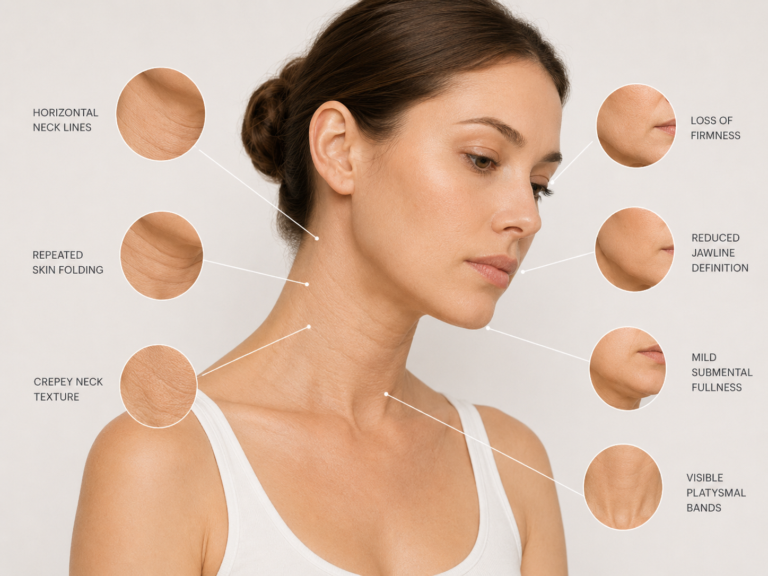
Each time the chin moves toward the chest, the skin at the front of the neck compresses into horizontal folds. Younger, more elastic skin can initially return to a smooth resting position, but repeated movement combined with collagen loss can cause these creases to remain visible.
The neck is particularly vulnerable because the skin is thinner, produces less oil, and is often excluded from daily skincare and sunscreen.
The most visible signs of tech neck include:
- Horizontal necklace lines
- Fine wrinkles
Poor posture may also make lower-face fullness or laxity appear more pronounced in photographs and video calls.
Is Blue Light Causing Any Pigmentary Skin Changes?
Visible light can affect pigmentation and skin biology at high enough doses, but everyday phone and computer screens have not been established to play any significant role.
In reality, repetitive posture, sun exposure, natural aging, collagen loss, and neglecting the neck in daily skincare are more important and practical factors to address.
How Repeated Neck Flexion Creates Lines
How Dermatologists Can Help
A board-certified dermatologist can identify whether a concern is primarily caused by volume loss, skin laxity, fine lines, muscle activity, pigmentation or a combination of factors.
Treatment should be personalized to the patient’s facial structure, skin type, weight-loss stage, lifestyle, and desired level of correction.
Treating GLP-1 Face and GLP-1-Related Skin Changes
For facial volume loss, treatment may include carefully placed hyaluronic acid fillers to restore support in areas such as the cheeks, temples, chin, or jawline.
Biostimulators such as Sculptra or Radiesse may be used to encourage gradual collagen production and improve skin quality.
Laser resurfacing, microneedling, PRP or PRF, and other energy-based treatments may also help address laxity, fine lines, and crepey texture.
At Hudson Dermatology & Laser Surgery, available options may include:
- Hyaluronic acid fillers
- Sculptra
- Radiesse
- Ultherapy
- Sofwave
- HALO, Fraxel, or ERBIUM resurfacing
- Microneedling with or without PRP
Patients experiencing hair shedding, dryness, nail changes, or irritation may also benefit from a dermatologic evaluation, nutritional review, and customized skincare plan.
Important to note, patients should not stop or change a GLP-1 medication because of an aesthetic concern without speaking with the clinician who prescribed it.
Treating Tech Neck and Horizontal Neck Lines
Tech neck treatment depends on the specific concern being addressed.
Fine horizontal lines may improve with conservative filler, while visible platysmal activity may respond to a neuromodulator in appropriately selected patients. Microneedling, resurfacing lasers, Ultherapy and Sofwave, and collagen-stimulating injectables may help improve texture, firmness, and overall neck skin quality.
At home, patients can support their results by raising screens closer to eye level, taking regular posture breaks, extending sunscreen below the jawline, and using neck-appropriate moisturizers, antioxidants, or retinoids.
More significant skin laxity may require a surgical consultation, since nonsurgical treatments cannot provide the same degree of tightening as a neck lift.
“The best plan is rarely one procedure. We may need to restore support, stimulate collagen, improve the skin surface, and address the habits contributing to the concern.” - Dr. Hoffman
Explore cutting edge cosmetic treatments at Hudson Dermatology and Laser Surgery
A Modern Dermatology Plan Should Be Personal
GLP-1 face and tech neck are not reasons to avoid medications or technology that improve daily life. They are reminders that appearance is influenced by metabolism, behavior, anatomy, and time.
A dermatologist can look beyond a single wrinkle or trend and determine whether the main concern is volume loss, collagen decline, muscle activity, pigmentation, or other factors.
Whether you are noticing facial changes during a GLP-1 weight-loss journey or horizontal neck lines from years of screen use, the right treatment plan begins with understanding what is happening beneath the skin. Dr. Chelsea Hoffman and the board-certified dermatologists at Hudson Dermatology & Laser Surgery create personalized plans that may combine medical evaluation, skincare, injectables, collagen-stimulating procedures, and advanced laser or energy-based technology.
Frequently Asked Questions
Not necessarily, as some changes may fluctuate over time, while established volume loss or laxity may benefit from professional treatment.
It may not be completely preventable, but gradual medically supervised weight loss, adequate nutrition, hydration, sun protection, and early dermatologic care may help.
Early lines may soften with skincare and posture changes, while established lines often require in-office treatment for a more visible improvement.
Skincare can improve hydration, texture, pigmentation, and collagen support, but it cannot fully replace lost volume or tighten significant laxity.
Some treatments can begin during weight loss, although more definitive volume correction is often easier to plan once weight is relatively stable.
Medical disclaimer
This article is for informational purposes only and does not constitute medical advice. Skincare products and treatments should be selected in consultation with a qualified dermatologist, especially for individuals with underlying skin conditions or sensitivities.


About Dr. Chelsea Hoffman
Dr. Chelsea Hoffman is a board-certified dermatologist specializing in cosmetic and medical dermatology.
Her approach combines injectables, advanced devices, regenerative treatments, and customized skincare, with an emphasis on natural structure, healthy skin, and early intervention.