
Psoriasis is one of the most common chronic inflammatory skin conditions, affecting more than 8 million Americans. It causes the immune system to accelerate skin cell turnover, resulting in thick, inflamed plaques covered with silvery scales. Symptoms often come and go in cycles and vary in severity.
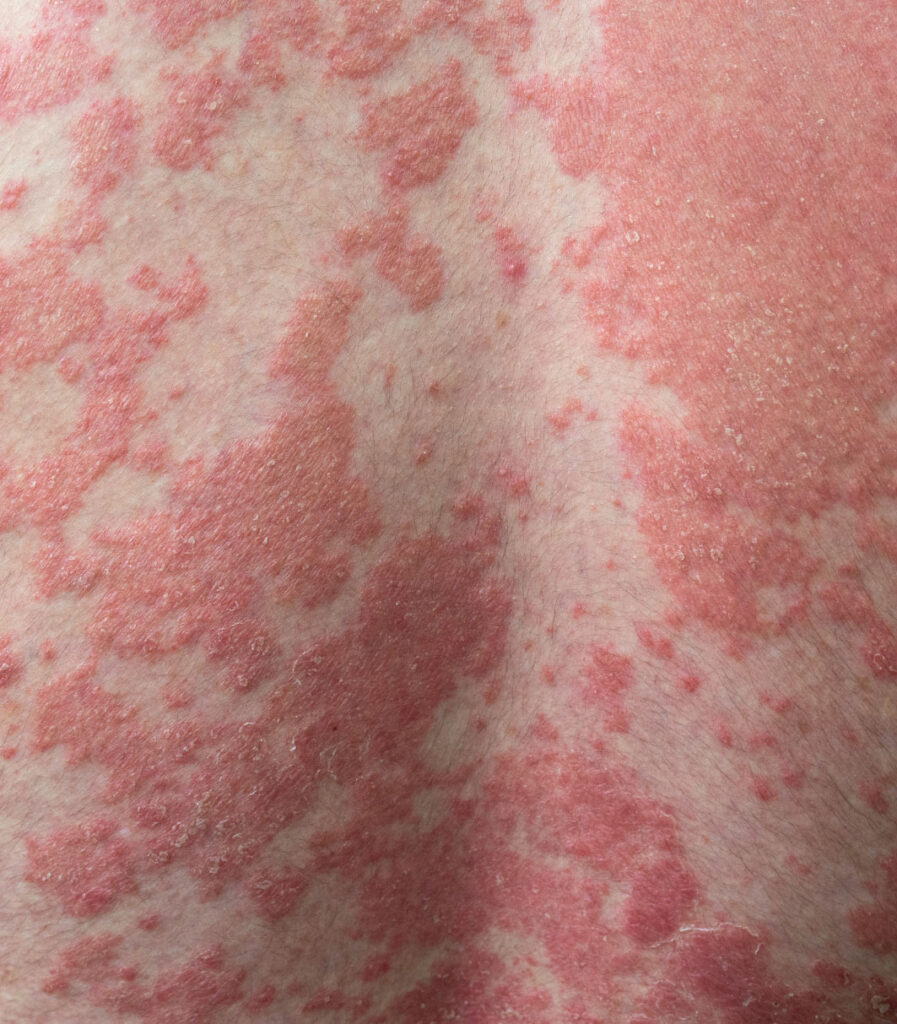
Psoriasis is a chronic autoimmune skin condition that causes skin cells to multiply much faster than normal. Instead of renewing every few weeks, new skin cells build up within days, leading to thick, inflamed plaques covered with silvery scales.
While the exact cause isn’t fully understood, psoriasis is thought to result from a combination of genetics and an overactive immune system. About one-third of patients have a family history of the condition.
Because psoriasis is an inflammatory disease, it can also be associated with conditions such as psoriatic arthritis, cardiovascular disease, diabetes, and depression, making early diagnosis and long-term management important.
Psoriasis can look different from person to person, but the most common symptoms include:
The most common form of psoriasis, characterized by raised, red plaques covered with silvery-white scales. It typically appears on the elbows, knees, scalp, and lower back.
Appears as numerous small, drop-shaped red spots, often developing suddenly after a strep throat or other infection. It is more common in children and young adults.
Develops in skin folds such as the armpits, groin, under the breasts, and between the buttocks. Lesions are smooth, shiny, and bright red with little or no scaling.
A less common form of psoriasis that causes white, pus-filled blisters surrounded by inflamed skin. It may affect specific areas such as the hands and feet or occur more extensively.
A rare but severe form of psoriasis that causes widespread redness, scaling, and inflammation over much of the body. It requires prompt medical evaluation and treatment.
Affects the fingernails and toenails, causing pitting, discoloration, thickening, crumbling, or separation of the nail from the nail bed. It may occur with or without skin psoriasis.
Although there is no cure for psoriasis, there are many effective treatment options that can help control symptoms, reduce inflammation, and improve quality of life.
Treatment depends on the type of psoriasis, severity, affected body areas, previous treatments, and your overall health.
Prescription creams and ointments are often recommended for mild to moderate psoriasis. These treatments help reduce inflammation, slow excessive skin cell growth, and relieve itching and discomfort.
Medical phototherapy uses carefully controlled ultraviolet light to slow skin cell turnover and calm inflammation. It may be recommended for patients with more widespread or persistent psoriasis.
For moderate to severe psoriasis, oral medications and biologic therapies can target the underlying immune response responsible for the disease. These advanced treatments may be recommended when psoriasis affects large areas of the body, involves the joints, or significantly impacts daily life.
At Hudson Dermatology & Laser Surgery, our board-certified dermatologists create personalized treatment plans designed to control flares, minimize symptoms, and help patients achieve long-term disease management.