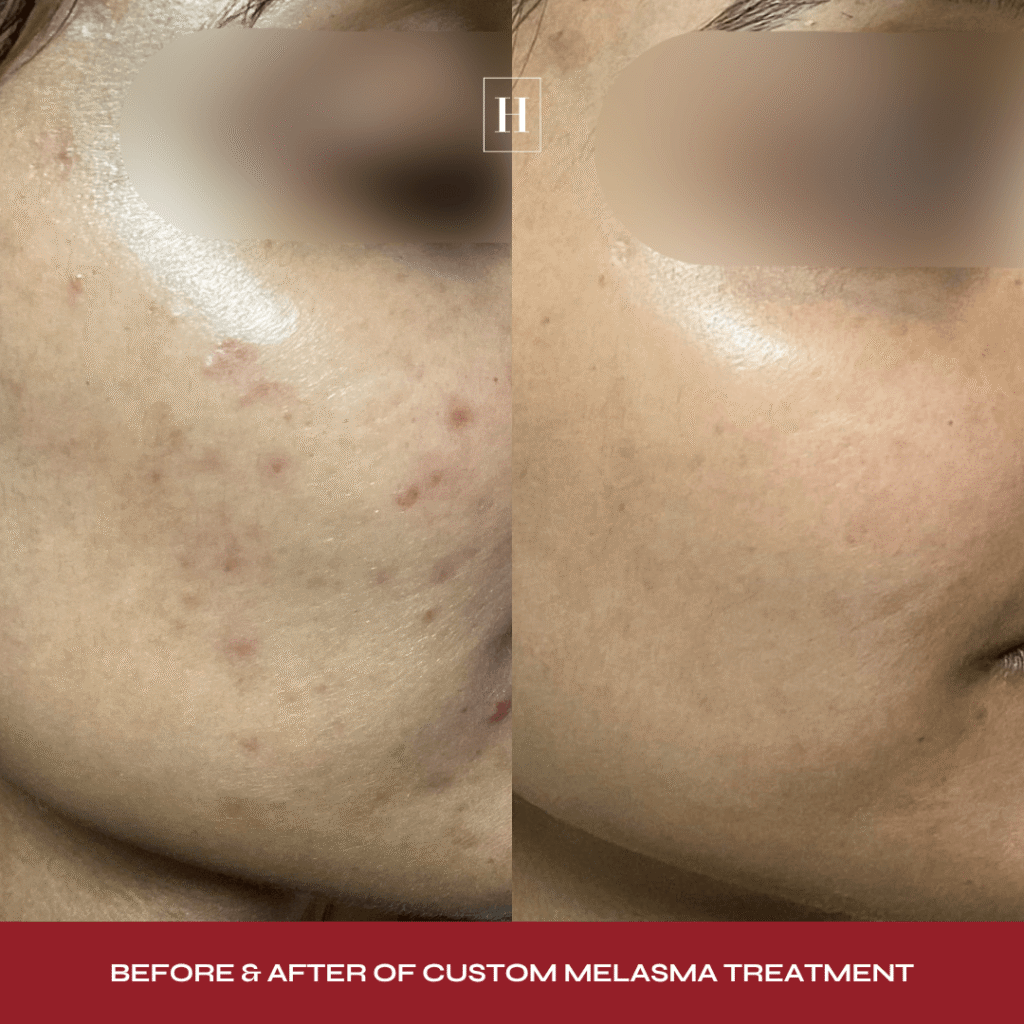
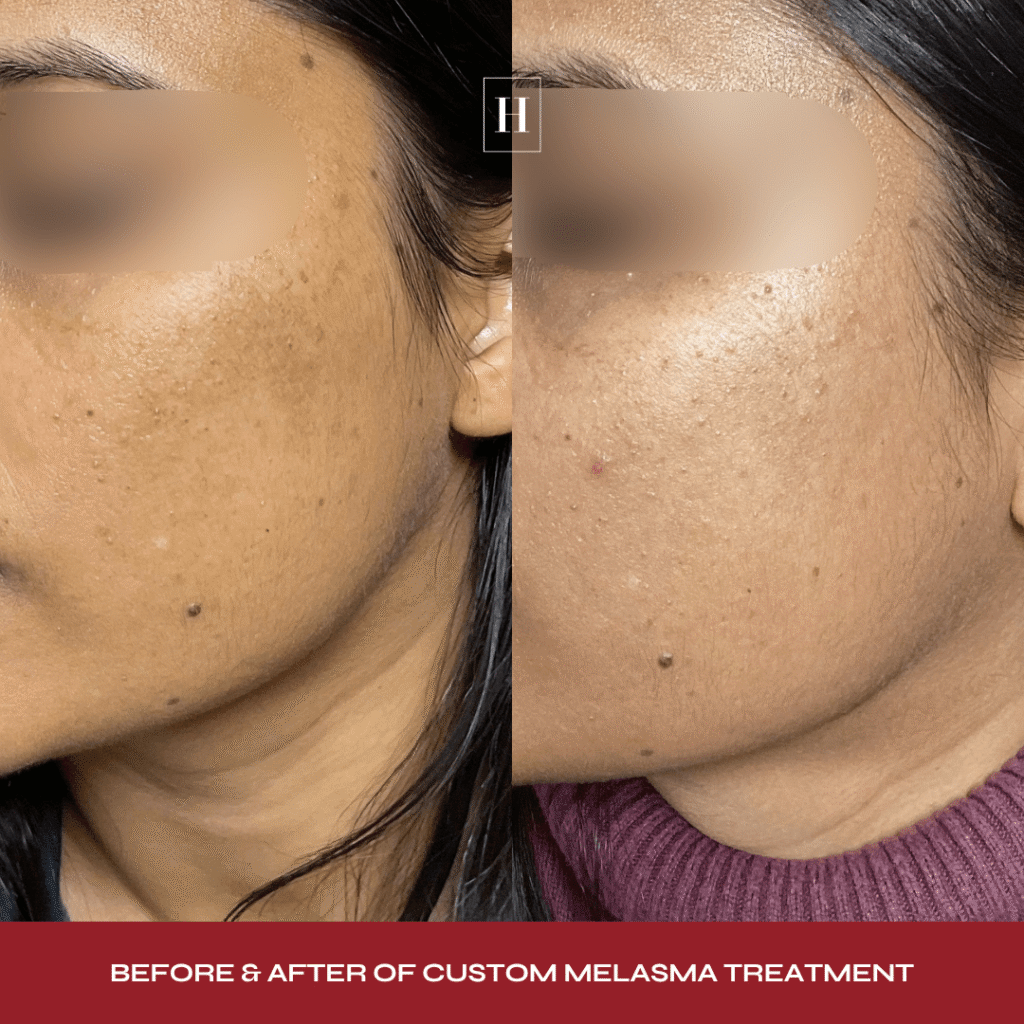
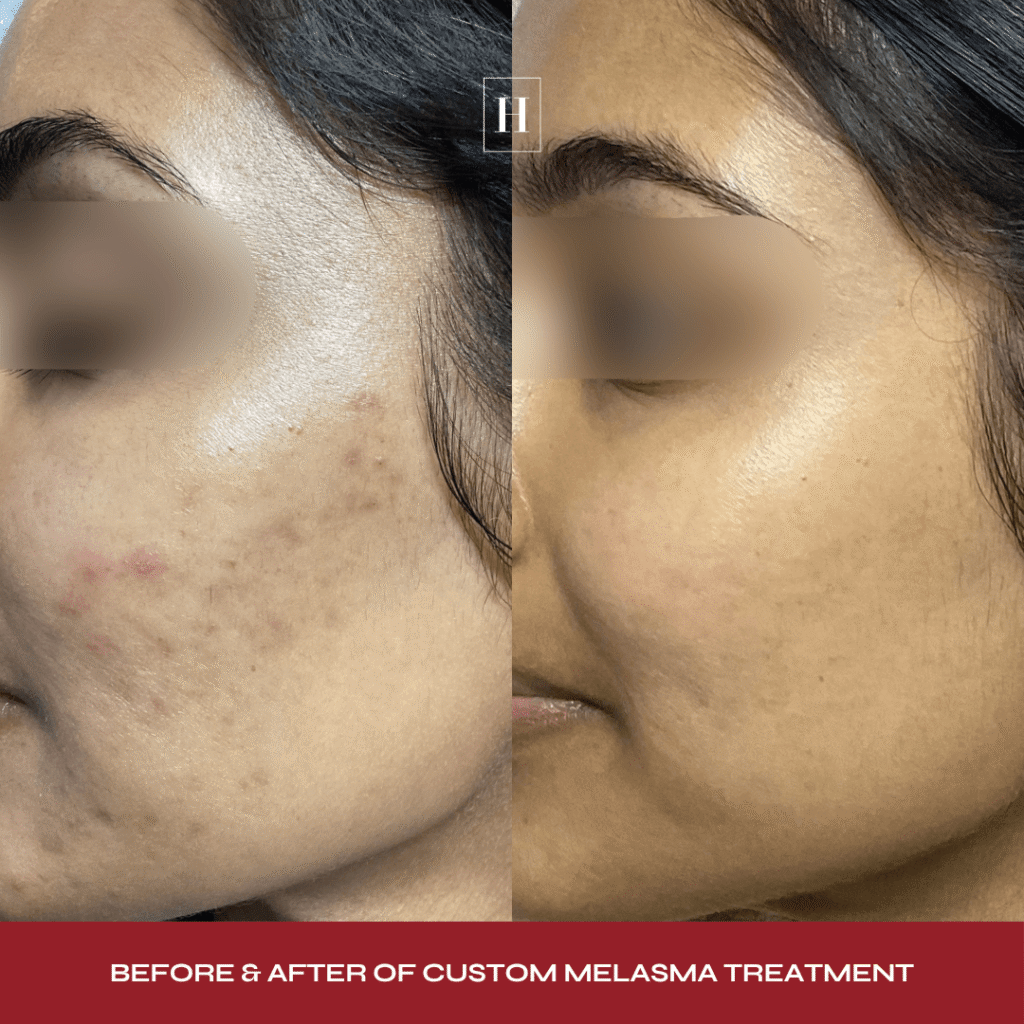
Melasma is a common skin condition that causes brown to grayish-brown patches on the cheeks, nose, forehead, chin, and upper lip. 90% of patients with melasma are women, and the condition is more common in people with darker skin, such as those of Asian, Hispanic, Mediterranean, Indian, Middle Eastern, and North African descent.
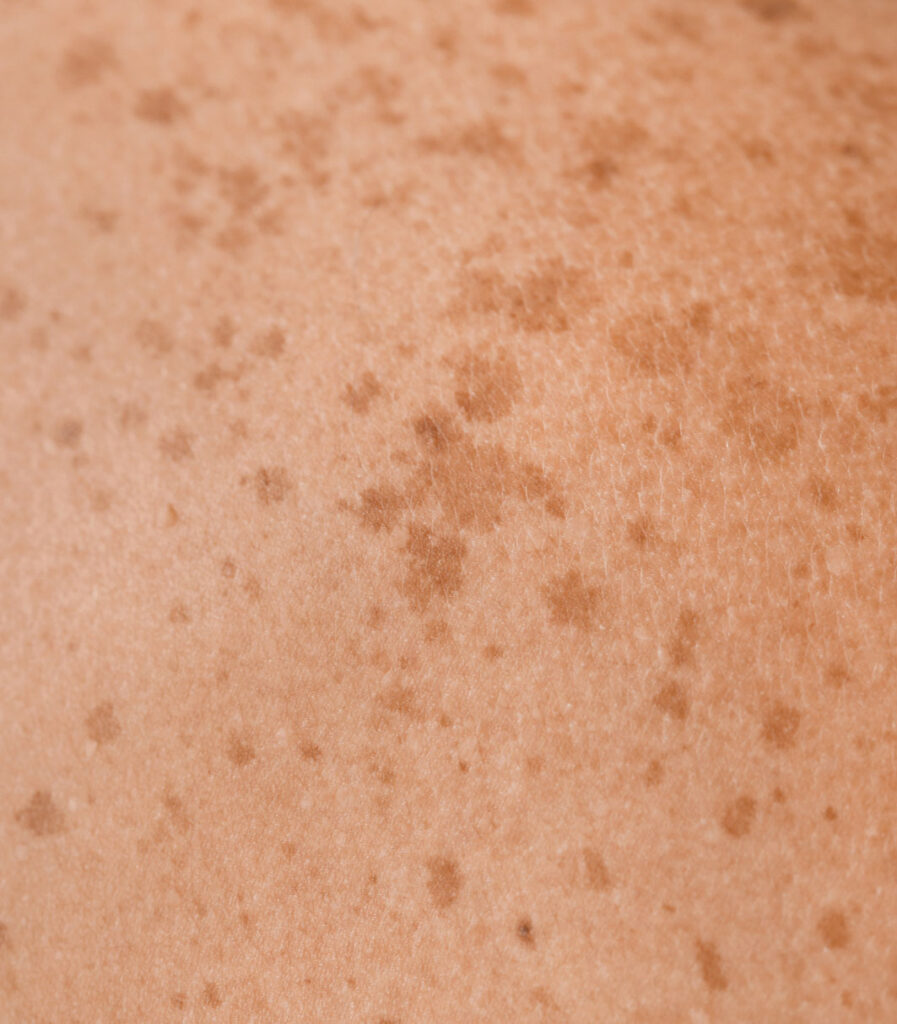
The cause of melasma is not entirely clear, although sun exposure and changes in hormones seem to be important in stimulating over-activation of the skin’s pigment-producing cells. Ultraviolet sun exposure makes melasma worse in the summer and causes it to return quickly after treatment if the skin isn’t protected from the sun.
Hormones make melasma worse in pregnancy, and both birth control pills and hormone replacement therapy can trigger and worsen the condition.
Pigment located closer to the skin’s surface. This type typically responds best to topical treatments and chemical peels.
Pigment located deeper within the skin. Dermal melasma is often more persistent and generally requires long-term management.
The most common type, containing both superficial and deeper pigment. Treatment often combines multiple therapies to improve overall pigmentation while helping reduce recurrence.
Melasma is one of the most challenging pigment conditions to treat because the pigment often sits at different depths within the skin and can easily recur if triggers aren’t controlled.
At Hudson Dermatology & Laser Surgery, treatment begins with identifying your type of melasma, skin type, lifestyle, and potential triggers before creating a personalized treatment plan.
Every case of melasma is different. Explore before & afters from patients treated with personalized combination therapies.