
Precision Scar Release for Acne Scars, Surgical Scars, and Traumatic Scars
15-30 minutes
1-2 days; bruising may last longer
After swelling and bruising resolve with continued improvement for 3–6 months
Cooler months are ideal for avoiding sun exposure
Yes
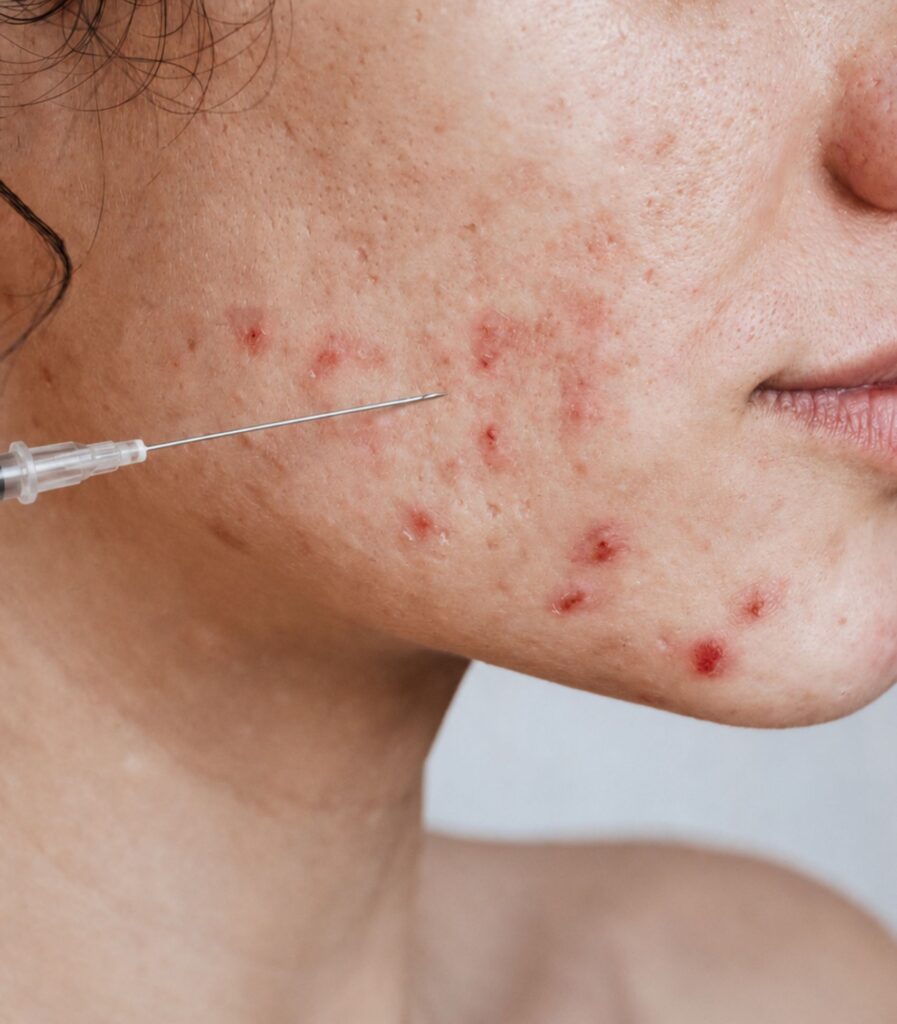
Subcision is a minimally invasive procedure used to release depressed scars that are tethered to the deeper tissue beneath the skin.
A specialized needle or blunt-tipped cannula is carefully passed beneath the scar to release the fibrous bands pulling the skin downward. Once these attachments are released, the scar can elevate and appear smoother.
The controlled healing response created by the procedure also stimulates new collagen formation beneath the scar. Subcision is particularly effective for rolling and tethered acne scars and may also be used for appropriately selected depressed surgical or traumatic scars.
Subcision is designed for depressed scars attached to deeper tissue. It is not generally used to treat raised hypertrophic or keloid scars.
Face: Cheeks, temples, jawline, forehead, chin, and other areas affected by tethered acne scars
Body: Selected depressed surgical or traumatic scars on the chest, abdomen, arms, legs, and other appropriate areas
The treatment area is thoroughly numbed with local anesthetic. A small entry point is then created, and a specialized needle or blunt-tipped cannula is carefully guided beneath the skin to release the fibrous bands holding the scar down.
Patients may feel pressure, movement, or a temporary pulling or popping sensation during the release, but the area should remain numb and comfortable.
Treatment time depends on the number, size, depth, and location of the scars being treated.
Bruising, swelling, tenderness, and temporary firmness beneath the skin are expected after subcision. Small entry points, redness, or mild bleeding may also occur.
Most swelling improves within several days. Bruising commonly lasts approximately one week but may persist for up to two weeks in some patients.
Temporary lumps, firmness, or unevenness may be felt beneath the skin as the area heals. These changes generally soften gradually.
Some improvement may become visible after the initial swelling and bruising resolve. The scars typically continue to improve over the following three to six months as collagen forms and the treated tissue remodels.
More than one treatment may be needed depending on the severity, depth, and number of tethered scars.
Subcision addresses the deeper attachments pulling a scar downward, but it does not treat every component of acne or surgical scarring.
It may be combined with treatments such as fractional laser resurfacing, AVAVA, Fraxel Dual FTX, SkinPen microneedling, RF microneedling, ExcelV, Halo, Erbium Laser, CO2 laser, PRF, EZ Gel, injectable fillers, and more.
Your dermatologist will evaluate the architecture of each scar and determine which combination and sequence of treatments is most appropriate.