
Featuring expert insights from Dr. Kiran Mian, Board-Certified Dermatologist at Hudson Dermatology & Laser Surgery
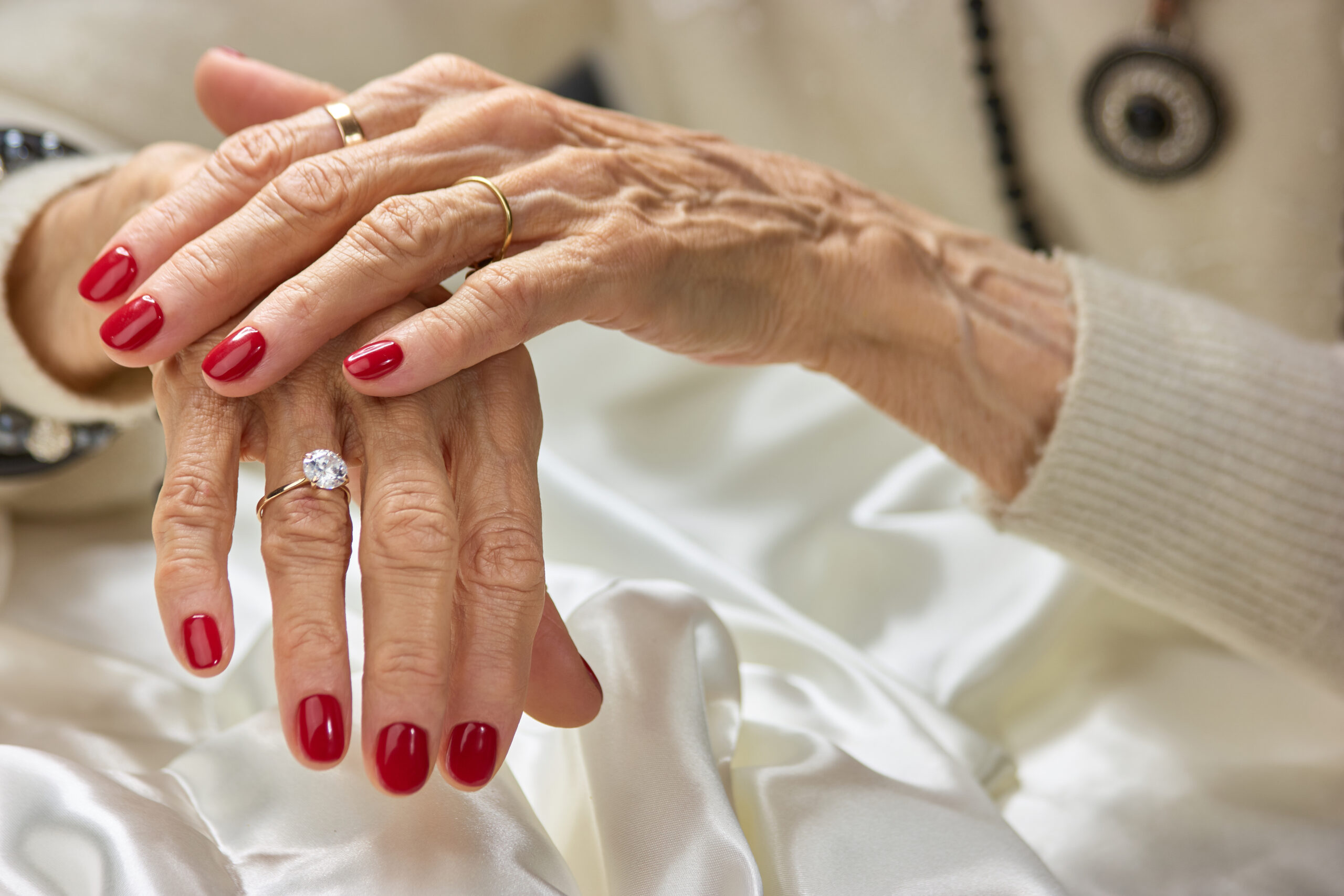
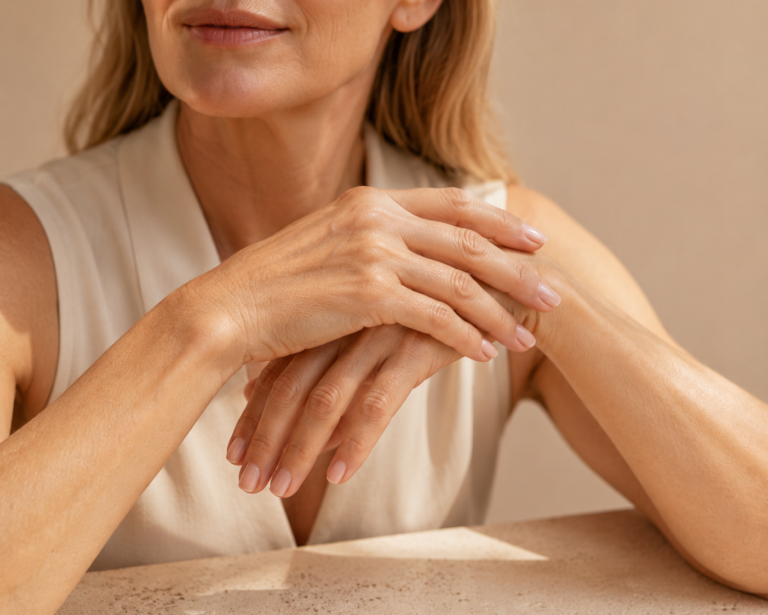
Many women begin noticing changes in their hands around the same time they notice changes in their face. The skin on the hands may appear thinner, veins become more visible, brown spots emerge, and the smooth texture that once characterised youthful hands gradually gives way to wrinkles and crepey skin.
In fact, the hands are often one of the first areas to reveal age. Unlike the face, which may benefit from daily skincare, sunscreen, and cosmetic treatments, the hands are frequently overlooked despite being exposed to sunlight, weather, and repeated washing every day.
For women over 40, understanding how the hands age and what can be done to protect them can help preserve not only the appearance of the skin, but also its health and resilience.
Why the skin on your hands is different
The skin on the back of the hands is uniquely vulnerable to aging.
Unlike the palms, which have thick skin designed to withstand constant friction, the skin covering the backs of the hands is relatively thin and contains less supportive fat tissue. Veins, tendons, and bones sit much closer to the surface, which means structural changes become visible more quickly as the years pass.
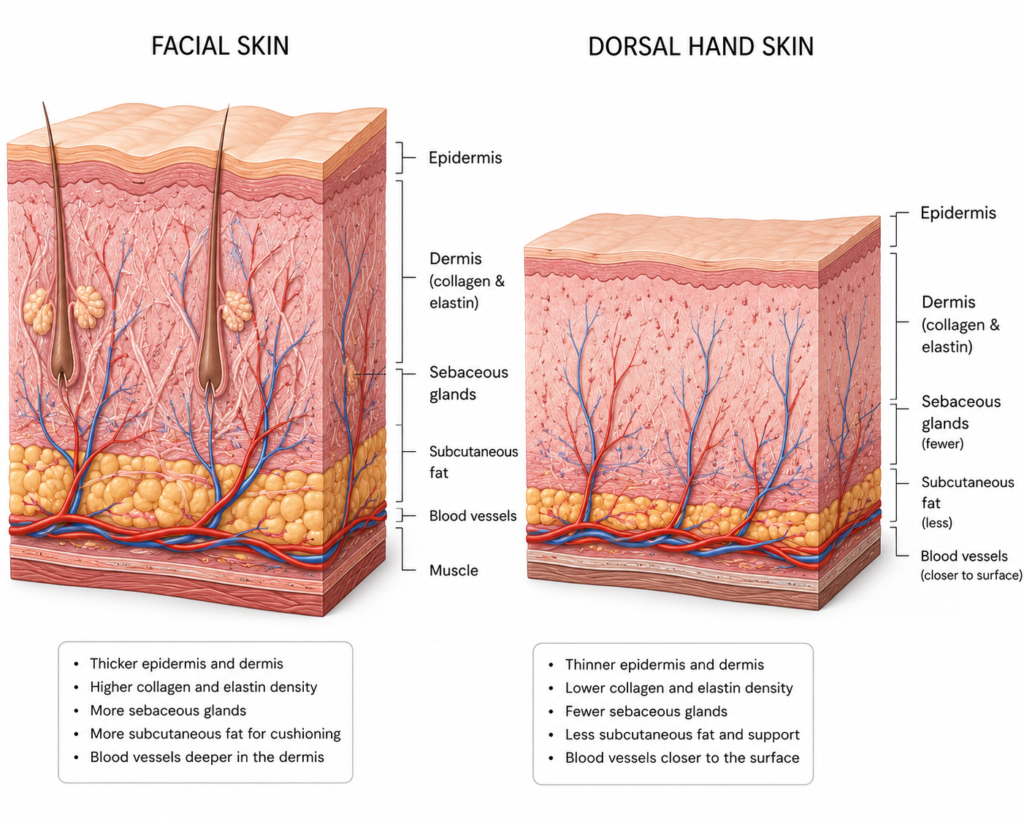
The hands also contain fewer oil-producing sebaceous glands than the face. These glands help maintain hydration and support the skin barrier, so having fewer of them makes the hands naturally more susceptible to dryness.
Perhaps most importantly, the hands receive a tremendous amount of cumulative sun exposure throughout life. Every drive, walk outdoors, and daily errand adds to the skin’s ultraviolet exposure, often without the protection of sunscreen.
Together, these characteristics make the hands particularly prone to visible aging.
How hands age over time
Hand aging is driven by two main processes: the natural aging that happens inside the body and the environmental damage that accumulates throughout life.
Dermatologists often refer to these as intrinsic aging and extrinsic aging. While both play a role, they affect the skin in different ways.
Intrinsic aging: The changes that come with time
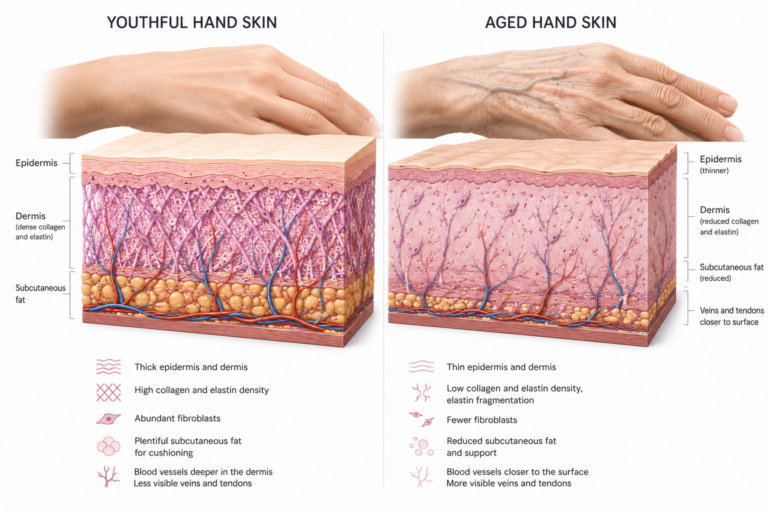
As we get older, our skin naturally produces less collagen and elastin. These are the proteins responsible for keeping skin firm, smooth, and resilient.
Beginning as early as our twenties, the cells that create these structural proteins gradually become less active. Over time, the skin becomes thinner, less elastic, and slower to repair itself.
For women, these changes often become more noticeable after menopause. Declining estrogen levels can accelerate collagen loss, contribute to dryness, and reduce the skin’s overall thickness.
The result is skin that may feel less firm, appear more fragile, and develop fine wrinkles more easily than it did in earlier decades.
Extrinsic aging: The effects of daily life
While we can’t stop natural aging, many of the most visible changes in our hands are actually caused by environmental factors.
The biggest contributor is sun exposure.
Every time your hands are exposed to ultraviolet (UV) radiation (whether you’re driving, walking outside, or spending time in the sun) small amounts of damage accumulate within the skin. Over years and decades, this damage breaks down collagen and elastin, accelerates pigment changes, and weakens the skin’s support structure.
This is why sun exposure is closely linked to:
- Wrinkles and crepey skin
- Brown spots and uneven pigmentation
- Loss of elasticity
- Thinning skin
- Rough texture
Other everyday habits can also contribute to aging hands. Frequent handwashing, sanitizers, cleaning products, smoking, and environmental pollution can all place additional stress on the skin and weaken its protective barrier.
Why veins and tendons become more visible
One of the changes many women notice first is that the hands begin to look more bony or veiny.
This happens because aging affects not only the skin itself, but also the supportive fat layer beneath it.
When we’re younger, a thin cushion of fat sits between the skin and the structures underneath. As this volume gradually decreases with age, veins, tendons, and bones become more noticeable.
Combined with thinner skin and collagen loss, this reduction in volume can give the hands a more skeletal appearance, even in people who otherwise have healthy skin.
Together, these natural and environmental changes gradually reshape the appearance of the hands, making them one of the earliest areas of the body to reveal age.
The most common signs of aging hands
As the skin ages, several changes occur simultaneously. Rather than being caused by a single process, aging hands typically result from a combination of collagen loss, fat loss, cumulative sun exposure, and weakening of the skin barrier.
Crepey skin and fine wrinkles
One of the most recognizable signs of hand aging is the development of crepey skin.
The term “crepey” refers to skin that develops a thin, finely wrinkled appearance resembling crepe paper. Rather than deep folds or wrinkles, the skin develops a network of small lines and texture changes.
Many women first notice this when the skin no longer appears smooth after moisturizing or when it begins to wrinkle easily during movement.
Crepey skin develops as collagen and elastin become fragmented and depleted. Healthy skin contains an organized network of collagen fibers that provide strength and support. As aging progresses, these fibers become thinner, less abundant, and increasingly disorganized.
At the same time, elastin fibers lose their ability to stretch and recoil efficiently. The skin gradually loses its structural integrity, leading to laxity, wrinkling, and the characteristic crepey appearance.
Age spots and uneven pigmentation
For many women, brown spots on the backs of the hands are among the earliest visible signs of aging.
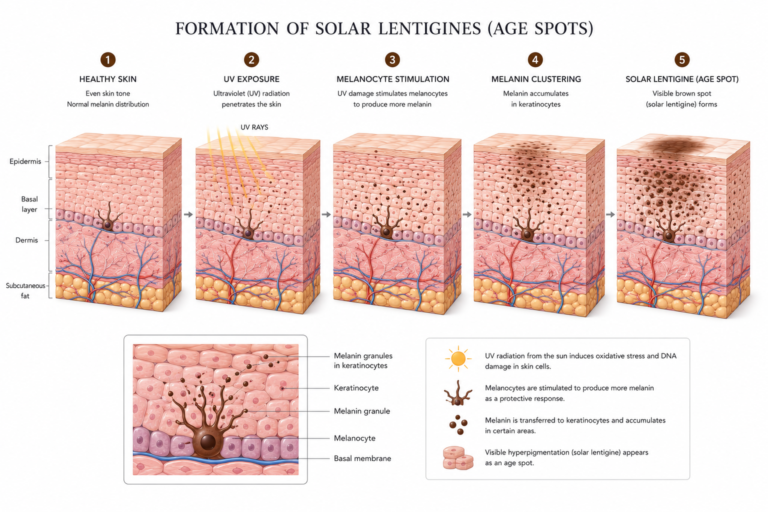
Often called age spots or solar lentigines, these flat brown patches develop gradually after years of cumulative ultraviolet exposure. Because the hands are exposed to sunlight almost every day, they frequently develop pigmentation changes even before they appear elsewhere on the body.
The process begins within the skin’s pigment-producing cells, known as melanocytes. Over time, repeated UV exposure causes these cells to produce and distribute melanin unevenly. Instead of remaining uniformly dispersed throughout the skin, pigment accumulates in specific areas, creating visible spots.
Although age spots are harmless, they often contribute significantly to an aged appearance.
Dryness, rough texture, and barrier damage
Another common concern among women over 40 is persistent dryness.
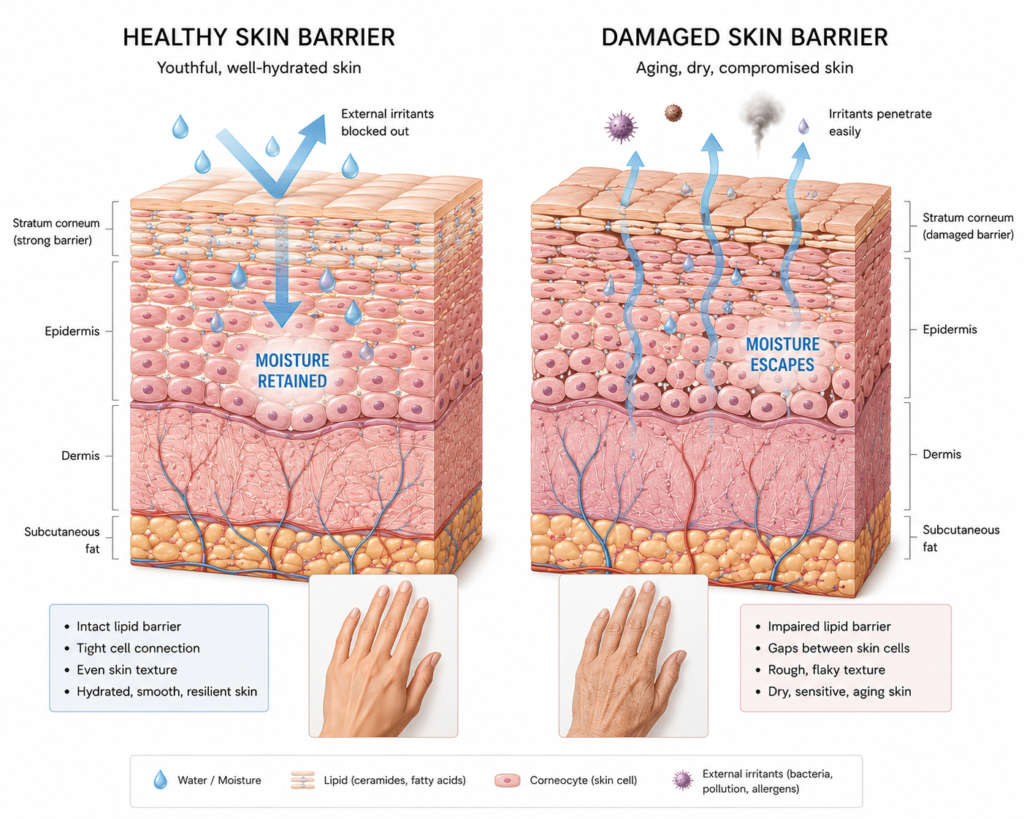
As we age, the skin naturally produces fewer lipids and retains moisture less efficiently. At the same time, repeated handwashing, sanitizers, household cleaners, and environmental exposure can weaken the skin barrier.
The skin barrier serves as the body’s protective shield, helping prevent moisture loss while defending against irritants and environmental stressors. When this barrier becomes compromised, water escapes more easily from the skin, leading to dryness, rough texture, flaking, and increased sensitivity.
Many women notice that their hands begin to feel rough or tight despite using moisturizers. This often reflects not only a lack of hydration, but also a weakened barrier that struggles to retain moisture.
Easy bruising and actinic purpura
The skin on the hands also becomes increasingly fragile with age.
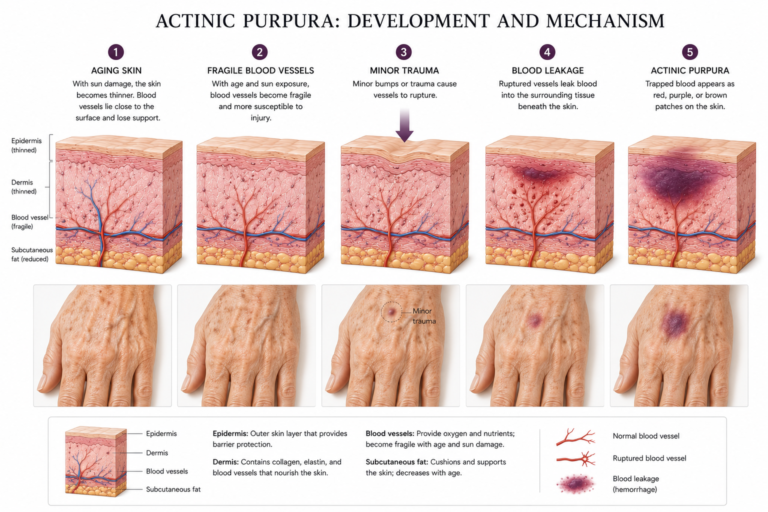
One condition dermatologists frequently see in older adults is actinic purpura, sometimes called senile purpura. This condition appears as dark purple bruises that develop after seemingly minor bumps or trauma.
Over time, both chronic sun exposure and natural aging weaken the skin’s supporting collagen network. Blood vessels become more fragile, while the skin itself becomes thinner and less protective.
As a result, small blood vessels can rupture more easily following minor injuries that may have gone unnoticed years earlier.
Although actinic purpura is generally harmless, it can be frustrating and may signal the cumulative effects of long-term photoaging.
How to prevent aging hands
While aging cannot be stopped entirely, many of the most visible changes can be slowed through consistent skincare and sun protection.
Make sunscreen a daily habit
If there is one recommendation dermatologists consistently emphasize, it is sunscreen.
Because ultraviolet radiation is one of the primary drivers of visible hand aging, protecting the hands from daily sun exposure is one of the most effective ways to preserve skin quality over time.
Sunscreen should be applied not only before outdoor activities but also before driving, walking, or any routine activity that exposes the hands to sunlight.
Many dermatologists recommend reapplying sunscreen after washing the hands, particularly during prolonged periods outdoors.
Support the skin barrier
Healthy skin begins with maintaining a healthy barrier.
Moisturizers containing ingredients such as ceramides, glycerin, hyaluronic acid, and niacinamide can help replenish moisture while strengthening the skin’s protective function.
Unlike temporary hydration alone, barrier-supportive skincare helps improve the skin’s ability to retain water over time.
Applying hand cream immediately after washing can be particularly effective because it helps seal moisture into the skin before evaporation occurs.
Consider retinoids
Retinoids remain among the most studied and effective topical ingredients for aging skin.
Derived from vitamin A, retinoids help stimulate collagen production, support cellular turnover, and improve skin texture. Over time, they may help soften fine lines, improve pigmentation irregularities, and strengthen aging skin.
Because the hands often receive less skincare attention than the face, incorporating a retinoid-based hand treatment can provide meaningful long-term benefits.
Protect your hands from everyday damage
Simple lifestyle habits can make a significant difference.
Wearing gloves during household cleaning, avoiding excessive hot water exposure, and choosing gentle cleansers can help reduce unnecessary stress on the skin.
Smoking cessation, a balanced diet, and overall health maintenance may also support healthier skin aging by reducing oxidative stress and promoting collagen preservation.
Dermatologist treatments for hand rejuvenation
For patients seeking more significant improvement, several in-office treatments can address visible signs of hand aging.
Treatments for age spots
Brown spots often respond well to laser treatments, intense pulsed light (IPL), and certain chemical peels. These treatments target excess pigment within the skin, helping create a more even complexion.
Treatments for volume loss
Dermal fillers can restore lost volume beneath the skin, reducing the prominence of veins and tendons while creating a smoother, more youthful appearance.
Treatments for skin texture
Laser resurfacing procedures can help stimulate collagen production and improve overall skin quality. By encouraging the skin’s natural remodeling processes, these treatments may improve texture, firmness, and fine wrinkles.
Because hand aging involves multiple processes occurring simultaneously, combination approaches often produce the most comprehensive results.
The importance of lasers and biostimulators
For patients looking to improve skin quality and texture, Dr. Kiran Mian often recommends BBL® and Halo® laser treatments. BBL helps reduce sun damage and pigmentation, while Halo stimulates new collagen production to improve crepey skin, texture, and overall skin quality. Together, they address many of the visible signs of hand aging.
For patients experiencing volume loss and more prominent veins or tendons, Dr. Mian may recommend Radiesse®. This biostimulatory filler not only restores volume but also stimulates the body’s natural collagen production, helping the hands appear smoother, fuller, and more youthful over time.
Dr. Kiran Mian's daily recommendations for aging hands
While professional treatments can address many signs of hand aging, daily skincare remains the foundation of long-term hand health.
Dr. Mian emphasizes the importance of maintaining hydration and supporting the skin barrier through consistent use of well-formulated hand creams. In a recent interview discussing hand care, she highlighted products containing ingredients such as ceramides, peptides, niacinamide, and glycerin. These are ingredients that help strengthen the skin barrier while improving moisture retention and overall skin quality.
She also supports the use of retinol-based hand treatments. Retinol can help stimulate collagen production, improve skin texture, and support healthier aging skin. Some dermatologists believe these collagen-supporting benefits may even help reduce the risk of age-related skin fragility associated with conditions such as actinic purpura.
Most importantly, consistency matters.
Many patients focus on finding the perfect product, but long-term improvement typically comes from daily habits: moisturizing regularly, protecting the skin barrier, using sunscreen, and maintaining a consistent skincare routine.
What to use for hydration?
One product Dr. Kiran Mian recommends is the ISDIN Ureadin Hand Cream, a moisturizer formulated with urea, an ingredient known for its ability to attract and retain moisture within the skin.
Regular use can help improve dryness, soften rough texture, and support the skin barrier—particularly for those who wash their hands frequently or struggle with persistent dryness. Applied consistently throughout the day, especially after handwashing, it can help keep aging hands hydrated, comfortable, and healthier-looking.
For women interested in learning more about dermatologist-recommended products and ingredients for aging hands, be sure to read the VOGUE article featuring Dr. Kiran Mian’s favorite hand care recommendations alongside other renowned dermatologists.
Visit your dermatologist for aging skin concerns
The hands are one of the most visible indicators of skin aging, particularly for women over 40. Thinning skin, volume loss, age spots, dryness, and easy bruising are all common changes that develop as collagen declines and cumulative sun exposure takes its toll.
Fortunately, many of these changes are preventable and increasingly treatable and our New York Dermatology office is uniquely suited to do just that.
With our developing longevity philosophy, VISIA instruments that provide real data on your skin age and highly effective targeted treatments, we can provide assistance for your skin as it ages, to have it mature in the best way possible.
Medical disclaimer
This article is for informational purposes only and does not constitute medical advice. Skincare products and treatments should be selected in consultation with a qualified dermatologist, especially for individuals with underlying skin conditions or sensitivities.


About Dr. Kiran Mian
Dr. Kiran Mian is a board-certified dermatologist at Hudson Dermatology & Laser Surgery in New York City.
She specializes in cosmetic and medical dermatology, with a focus on acne, pigmentation, skin health, and evidence-based skincare treatments.
She has taken up the role of Director of Clinical Innovation for Reale Actives, the celebrity skincare line created in collaboration with Alix Earle focusing on acne prevention through focused active ingredients.
Dr. Mian regularly contributes expert commentary to leading beauty and wellness publications, helping patients better understand the science behind modern skincare and dermatologic care.