

Board-certified dermatologist Dr. Dhaval Bhanusali of Hudson Dermatology and Laser Surgery in New York recently joined wellness creator and podcast host Arielle Lorre on the Well with Arielle Lorre podcast to discuss the skincare routines, treatments, and lifestyle habits that actually make a difference as we age.
The conversation moved far beyond trendy skincare advice. Instead, Dr. Bhanusali shared a more long-term philosophy around skin health, touching on retinoids, lasers, adult acne, barrier repair, preventative Botox, collagen loss, and the future of regenerative skincare.
One of the biggest takeaways from the episode was surprisingly simple: many people are doing too much skincare, too aggressively, and often focusing on the wrong things entirely.
Why your 30s are the decade that starts showing on your skin
According to Dr. Bhanusali, your 20s are about prevention and building healthy habits, while your 30s are when those habits begin visibly paying off.
This is often the decade when patients begin noticing uneven texture, early collagen loss, persistent redness, pigmentation, or adult acne for the first time. Social media and video-based platforms have also made people far more aware of their skin quality overall
“People are seeing themselves more often. So they’re starting to see the difference in their skin texture and quality.”
Rather than reacting with increasingly complicated routines, Dr. Bhanusali encourages patients to focus on consistency, maintenance, and long-term skin health.
Rather than reacting with increasingly complicated routines, Dr. Bhanusali encourages patients to focus on consistency, maintenance, and long-term skin health.
The skincare ingredient Dr. Bhanusali wishes he started using earlier
If there is one thing Dr. Bhanusali says he would change about his own skincare journey, it is starting a retinoid earlier.
“If I can go back in time, I probably would have started a retinoid when I was like 18 years old and never stopped.”
Retinoids remain one of the most researched ingredients in dermatology for supporting collagen production, improving texture, reducing breakouts, and softening early signs of aging.
What many patients do not realize, however, is that retinoids require patience. Dr. Bhanusali explained that irritation and dryness during the first few weeks are extremely common, but the long-term improvement in texture and clarity is what keeps patients consistent over time.
For patients in their 30s, he often recommends gradually increasing retinoid strength as the skin adapts.
Retinoids remain one of the most researched ingredients in dermatology for supporting collagen production, improving texture, reducing breakouts, and softening early signs of aging.
What many patients do not realize, however, is that retinoids require patience. Dr. Bhanusali explained that irritation and dryness during the first few weeks are extremely common, but the long-term improvement in texture and clarity is what keeps patients consistent over time.
For patients in their 30s, he often recommends gradually increasing retinoid strength as the skin adapts.
Why many people are damaging their skin barrier without realizing it
One of the most actionable moments in the podcast came when Dr. Bhanusali described a patient whose skin improved dramatically after stopping nearly all of her skincare products.
The patient had been layering multiple active ingredients, over-exfoliating, and constantly chasing online skincare trends. Instead of prescribing another product, Dr. Bhanusali simplified her routine completely.
“We’re not going to prescribe you anything. We’re just going to stop everything.”
Within weeks, her skin was significantly calmer and clearer.
He explained that barrier damage is one of the biggest issues he now sees in modern dermatology, particularly among patients in their 30s and 40s who feel pressure to constantly add more products, exfoliants, and treatments into their routines.
His approach is intentionally slower and more controlled, often introducing products gradually over time rather than all at once.
The skincare routine Dr. Bhanusali recommends in your 30s
Rather than chasing trends, Dr. Bhanusali believes skincare in your 30s should focus on protecting skin quality long term.
The foundation of his approach includes:
- gentle cleansing
- antioxidant protection
- hydration
- barrier support
- daily SPF
- retinoids at night
He repeatedly referred to sunscreen as the single most important skincare product overall.
“I always have to say SPF. It’s by default. It’s in my blood.”
He also discussed how skincare priorities begin shifting in your 30s. Instead of focusing primarily on oil control, many patients need to begin prioritizing barrier repair and hydration.
According to Dr. Bhanusali, a compromised skin barrier contributes to many inflammatory skin conditions, including sensitivity, rosacea, and chronic irritation.
Why lasers may matter more than people realize after 30
One of the strongest opinions throughout the episode involved lasers.
Dr. Bhanusali described lasers as one of the highest-value long-term investments patients can make for skin quality and aging prevention.
Rather than viewing lasers as occasional cosmetic treatments, he sees them as maintenance tools that support collagen production, improve texture, reduce pigmentation, and help reverse visible sun damage over time.
He specifically discussed treatments such as Laser Genesis, Clear + Brilliant, IPL/BBL, and fractional lasers as useful tools depending on skin type and concerns.
One particularly interesting point involved the growing research around fractional lasers and sun damage reversal.
“There’s more and more evidence that just to prevent the sins of yesterday, doing a laser is a good idea.”
He also noted that simply removing years of visible sun damage can sometimes make patients look younger than aggressively treating wrinkles alone.
Adult acne after 30 is more common than most people think
Adult acne was another major topic in the discussion.
According to Dr. Bhanusali, many adults incorrectly assume breakouts should disappear after adolescence, when in reality acne often continues or changes form later in life.
In many cases, he sees stress-related breakouts, hormonal fluctuations, rosacea, or inflammation caused by excessive skincare routines.
He also explained that rosacea is frequently mistaken for traditional acne, especially because redness and inflammatory bumps can appear very similar.
Triggers can include alcohol, spicy foods, caffeine, stress, and poor sleep.

The surprising skincare factor Dr. Bhanusali says matters most
When Arielle Lorre asked what instantly improves skin appearance, Dr. Bhanusali did not mention a serum, injectable, or device.
He answered with one word: sleep.
Poor sleep increases cortisol levels, which can contribute to inflammation, oil production, breakouts, enlarged-looking pores, and dull texture. While many people rely on quick fixes like icing or depuffing tools, Dr. Bhanusali emphasized that skin health ultimately reflects internal recovery and stress regulation.
“Sleep will never not be the most important thing.”
Why Dr. Bhanusali thinks vitamin C is becoming overrated
One of the more unexpected moments in the podcast came when Dr. Bhanusali described vitamin C as an overrated ingredient.
While he acknowledged vitamin C’s importance historically, he explained that many formulas are unstable, irritating, or no longer the best antioxidant technologies available.
Instead, he expressed strong interest in ingredients such as peptides and niacinamide, particularly because newer formulations are becoming more stable and multifunctional.
He also pointed out that many patients improve simply by removing inflammatory active ingredients from their routines altogether.
The future of skincare may focus more on longevity than anti-aging
Toward the end of the conversation, Dr. Bhanusali discussed how AI, regenerative medicine, and advanced imaging technologies are beginning to reshape dermatology.
He described a growing shift away from simply correcting visible aging and toward slowing the biological processes that drive it in the first place.
“Longevity is looking forward. What are the things you can do today to look better tomorrow?”
He also shared that his office is currently studying technologies that may objectively measure whether treatments are reversing visible skin age using advanced imaging and epigenetic testing.
While he remains cautious about overhyped trends, he believes the next decade of skincare innovation will move extremely quickly.
Medical disclaimer
This article is for informational purposes only and does not constitute medical advice. Skincare products and treatments should be selected in consultation with a qualified dermatologist, especially for individuals with underlying skin conditions or sensitivities.

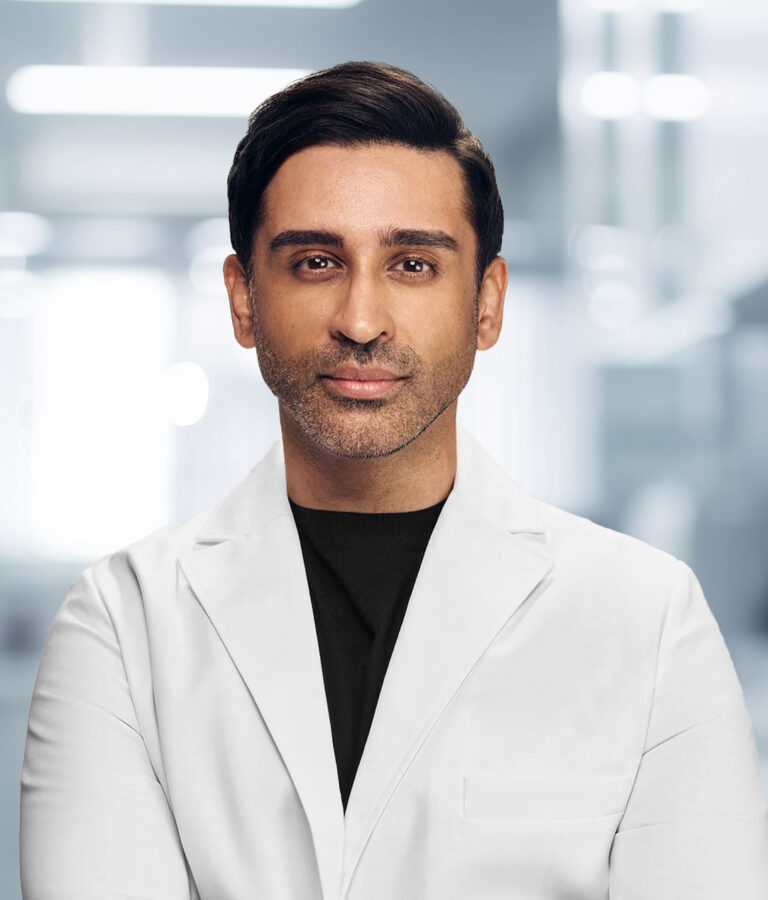
About Dr. Dhaval Bhanusali
Dr. Dhaval Bhanusali is a board-certified dermatologist at Hudson Dermatology & Laser Surgery in New York City.
He is known for his work in cosmetic dermatology, regenerative skincare science, laser treatments, and dermatologist-developed product innovation.
In addition to treating patients, Dr. Bhanusali has contributed to major skincare and wellness brands including Rhode, ELM Biosciences, and Skin Medicinals, helping bridge the gap between clinical dermatology and modern formulation science.