When it comes to skincare for mature skin, the conversation can quickly become overwhelming. New launches, trending ingredients, and social media advice often blur the line between what looks promising and what is actually proven to work.
In her recent feature in the Daily Mail, Dr. Aya Ahram, board-certified dermatologist at Hudson Dermatology and Laser Surgery, offers a more refined perspective. Her recommendations focus on ingredients and routines that are consistently supported by dermatologic research, while still fitting into a routine that feels realistic and elevated.
The result is a smarter, more curated approach to aging skin.
Why Skin Changes Over Time And What It Really Needs
As skin matures, collagen production declines, hydration becomes harder to maintain, and cell turnover slows down. These shifts lead to fine lines, changes in texture, and a loss of firmness.
Rather than overcorrecting with aggressive routines, Dr. Ahram’s approach is to support the skin where it needs it most. This means focusing on ingredients that rebuild, replenish, and maintain.
Retinoids: The Foundation of Long-Term Skin Improvement
Retinoids remain one of the most well-studied and effective ingredients in dermatology.
The paper “Topical Retinoids in the Treatment of Photodamaged Skin” outlines that retinoids increase collagen production and normalize skin cell turnover, leading to smoother texture and reduced fine lines over time. You can explore the study here.
In simple terms, consistent use helps the skin behave more like it did when it was younger.
Dr. Ahram centers retinoids as a core step in any routine for mature skin, while emphasizing the importance of starting at a level your skin can tolerate.
“Retinol helps increase skin cell turnover and boost collagen production to help with dullness, fine lines, and wrinkles.”
The key is not strength, but consistency.
Peptides: Supporting Skin Structure in a More Subtle Way
Peptides offer a complementary approach, especially for patients who want results without irritation.
The study “Cosmeceuticals for Skin Aging: Peptides and Their Role in Skin Repair” shows that peptides can signal the skin to produce more collagen and improve elasticity with regular use.
In practice, this translates to skin that feels firmer and more resilient over time.
Dr. Ahram often recommends peptides as part of a balanced routine:
“Peptides stimulate collagen production, support skin repair, reduce inflammation, and improve elasticity.”
They are particularly useful for patients who need a gentler entry point into anti-aging care.
Hyaluronic Acid: The Quiet Essential
Hydration is often underestimated, but it plays a critical role in how skin looks and feels. The review “Hyaluronic Acid: A Key Molecule in Skin Aging” explains that hyaluronic acid improves hydration and helps maintain the skin barrier, which in turn enhances overall skin appearance.
In everyday terms, well-hydrated skin reflects light better and appears smoother.
Dr. Ahram highlights its role as a supporting ingredient:
“It can work well in conjunction with retinols to offset potential irritation by providing increased moisture to the skin barrier.”
It is often the difference between a routine that works in theory and one that works in real life.
The Eye Area: Where Precision Matters
The eye area tends to show early signs of aging due to thinner skin and constant movement.
Dr. Ahram recommends focusing on ingredients that address fine lines, pigmentation, and puffiness.
Retinoids help with texture, antioxidants support skin health, and ingredients like caffeine can reduce the appearance of under-eye swelling.
Small, targeted adjustments here can create a noticeable difference in overall appearance.
What You Can Skip (And Why It Matters)
One of the most valuable aspects of Dr. Ahram’s guidance is knowing what is not worth investing in.
Neck creams
“Most neck creams contain the same active ingredients as anti-aging facial moisturizers.” says Dr. Ahram.
Instead of adding another product, she advises extending your existing routine to the neck.
Topical collagen
While collagen is essential within the skin, applying it topically does not meaningfully increase collagen levels.
Research consistently shows that collagen molecules are too large to penetrate the skin barrier. This is why ingredients that stimulate collagen production are far more effective.
Morning and Evening Routine for Mature Skin
One of the most common questions patients ask is how to structure their routine without overcomplicating it. Dr. Ahram’s approach is simple, effective, and grounded in consistency.
Morning Routine
- Gentle cleanser to refresh the skin without stripping
- Antioxidant serum to protect against environmental damage
- Hyaluronic acid or hydrating serum to support moisture levels
- Moisturizer to reinforce the skin barrier
- Broad-spectrum SPF as the most important anti-aging step
This routine focuses on protection and hydration, which are essential during the day.
Evening Routine
- Cleanser to remove makeup, sunscreen, and buildup
- Retinoid to support collagen production and cell turnover
- Peptide or hydrating serum if additional support is needed
- Moisturizer to repair and maintain the skin barrier overnight
Evening is where the skin does most of its repair work, making it the ideal time for active ingredients.
The key is not adding more steps, but using the right ones consistently.
When Skincare Needs Support
Even the most well-formulated routine has its limits. As collagen loss becomes more visible, in-office treatments are often what create the most meaningful change.
At Hudson Dermatology, collagen-focused treatments are designed to go beyond surface-level improvement by stimulating the skin at a deeper level.
Commonly recommended options include:
- BroadBand Light (BBL) to improve tone while stimulating collagen over time
- HALO laser to target texture, fine lines, and early skin laxity
- Clear + Brilliant for subtle, ongoing collagen support with minimal downtime
- Fractional resurfacing lasers to trigger deeper collagen remodeling
These treatments are often layered strategically, depending on the patient’s skin goals, to restore firmness, refine texture, and maintain long-term skin quality.
In practice, this is where Dr. Ahram’s philosophy comes full circle. The right at-home routine supports the skin daily, while in-office treatments help rebuild what time gradually reduces.
Medical disclaimer
This article is for informational purposes only and does not constitute medical advice. Skincare products and treatments should be selected in consultation with a qualified dermatologist, especially for individuals with underlying skin conditions or sensitivities.

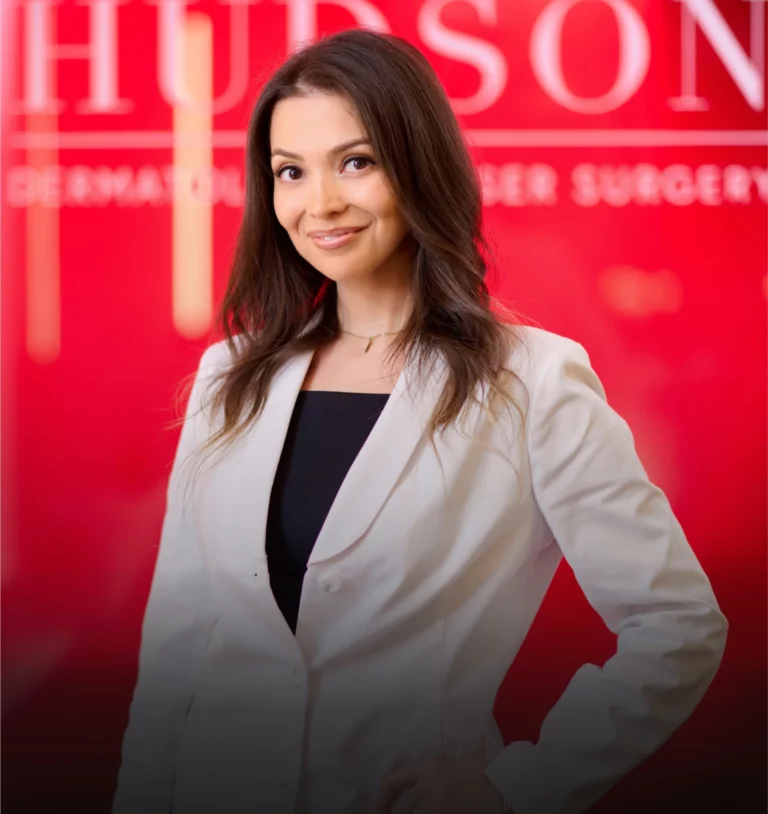
About Dr. Aya Ahram
Dr. Aya Ahram is a board-certified dermatologist at Hudson Dermatology and Laser Surgery in New York City, specializing in medical, cosmetic, and surgical dermatology.
Her approach is grounded in clinical precision, with a strong emphasis on patient education and long-term skin health. She is known for guiding patients through complex skincare decisions with clarity, helping them understand not just what to use, but why it works.
Dr. Ahram has been featured in multiple publications including the Daily Mail, where she provides expert insight on skincare ingredients, treatment strategies, and how to build routines that evolve with the skin over time.